An evening routine has a different job from a morning one. Instead of warming you up, it should help you slow down: long holds, slow breathing and poses that let the floor (or your mattress) do the work. This one takes about twelve minutes and stays on the floor from start to finish.
Try it 30 to 60 minutes before you’d like to be asleep, with the lights low and your phone in another room or face down. If you’ve had a long day on your feet, you’ll probably enjoy the legs-up-the-wall pose most.
What you need
- A mat or a rug, or your bed for the last few poses
- Two pillows or a firm cushion
- A wall with a bit of clear floor in front of it
- Optional: a blanket for the end, since your body cools down as you relax
Before you start
Keep every pose at about half of your maximum stretch. Evening stretching is about letting go rather than going deeper. If you’re pregnant, check with your healthcare provider before lying on your back for several minutes, and skip any pose that causes pain, tingling or numbness.
The routine at a glance
| Pose | Time |
|---|---|
| Child’s pose | 1½ minutes |
| Supported seated forward fold | 1½ minutes |
| Reclined butterfly | 2 minutes |
| Lying twist | 2 minutes |
| Knees to chest | 1 minute |
| Legs up the wall | 3 minutes |
| Resting breath | 1 minute |
Step by step
1. Child’s pose
Time: 1½ minutes
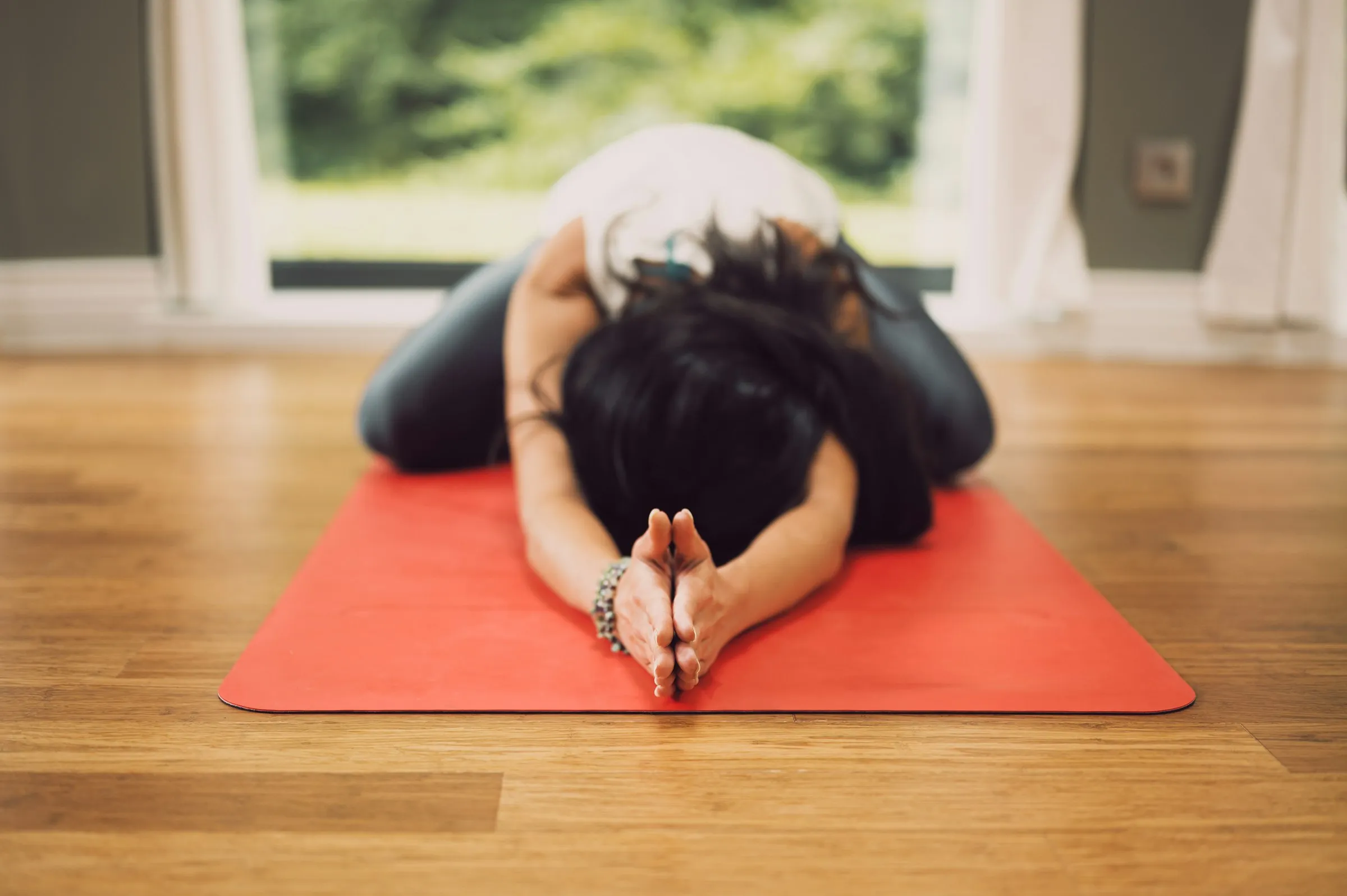
Kneel with your big toes touching and your knees as wide as is comfortable. Sit your hips back toward your heels and fold forward, resting your forehead on the floor, a pillow or your stacked fists. Let your arms rest alongside your body or stretch them forward. Breathe into your back and let each exhale be a little longer than the inhale.
Make it easier: Slide a pillow lengthwise under your chest and turn your head to one side, switching halfway.
2. Supported seated forward fold
Time: 1½ minutes
Sit with your legs stretched out in front of you, knees bent as much as you like. Stack two pillows on your thighs and fold forward over them, resting your chest, arms and head. You don’t need to reach your feet. The point is to feel held, not stretched to the limit.
Make it easier: Sit on a folded blanket to tilt your pelvis forward, and keep your knees well bent.
3. Reclined butterfly
Time: 2 minutes
Lie on your back, bring the soles of your feet together and let your knees fall open. Put a pillow or folded blanket under each knee so your inner thighs don’t have to hold on. Rest one hand on your belly and one on your chest, and feel your breath move under your hands.
Make it easier: Slide your feet farther away from your hips to soften the stretch.
4. Lying twist
Time: 2 minutes (1 minute per side)
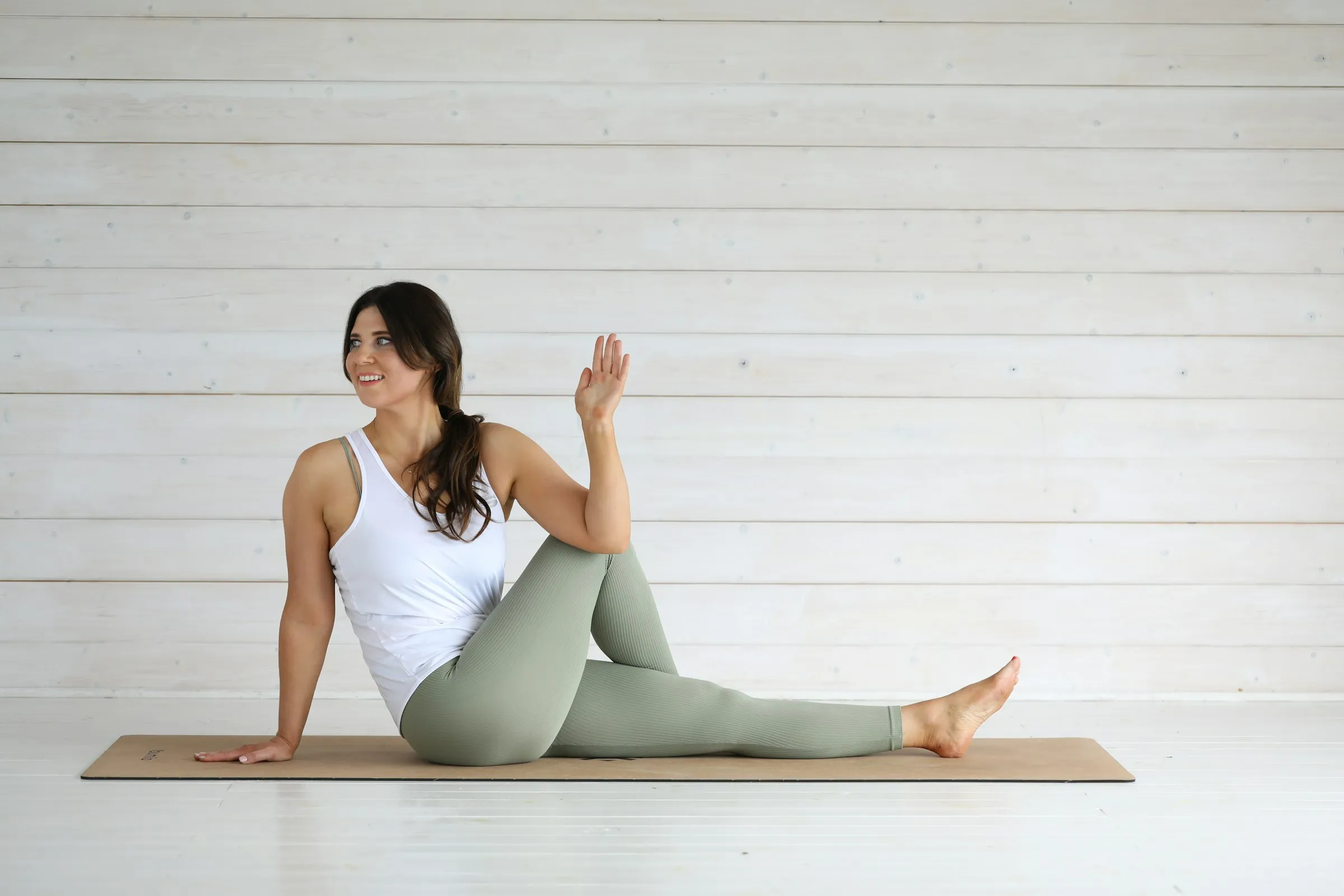
Still on your back, hug your knees in, then lower them to the right, stacked on top of each other. Stretch your arms out to the sides or let your left hand rest on your belly. Turn your head to the left only if your neck likes it. After a minute, bring your knees back to center and lower them to the left.
Make it easier: Rest your knees on a pillow so they don’t hover.
5. Knees to chest
Time: 1 minute
Hug both knees toward your chest with your hands on your shins or behind your thighs. Rock gently from side to side so your lower back rolls against the floor, then make small circles with your knees in one direction and then the other.
6. Legs up the wall
Time: 3 minutes
Sit sideways with one hip touching the wall. Lower your back to the floor as you swing your legs up the wall, then shuffle until your hips are close to it, though they don’t have to touch. Let your arms rest by your sides, palms up. If the backs of your legs feel too stretched, scoot a little farther from the wall. This is the pose to linger in if you have the time.
Make it easier: Slide a folded blanket under your hips, or rest your calves on the seat of a chair or sofa instead of the wall.
7. Resting breath
Time: 1 minute
Bend your knees, roll to one side and come back to lying flat, or move into bed. Breathe in through your nose for a count of four and out for a count of six or eight. When the minute is up, let your breath go back to its own rhythm.
Small things that help
- Same time, most nights. A routine that starts at roughly the same time each evening becomes a cue your body learns to recognize.
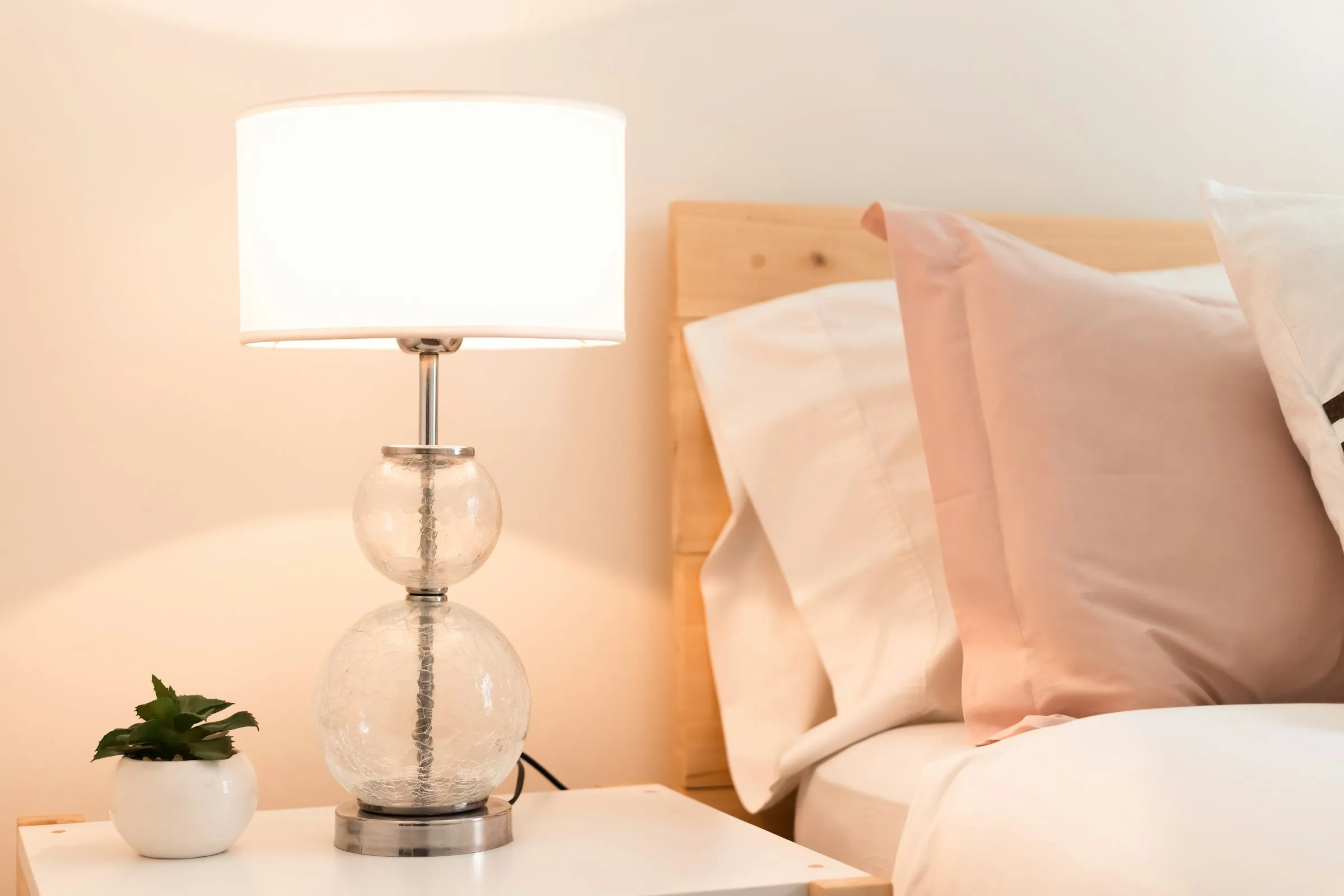
- Low light. Switch off the overhead light and use a lamp. The routine is easier to settle into when the room already feels like bedtime.
- Do part of it in bed. The reclined butterfly, knees to chest and the resting breath all work on a mattress, and legs up the wall works against a headboard if your bed is pushed against a wall.
- Keep it boring. Use the same poses in the same order. Familiarity is what makes it relaxing.
Where to go next
For the start of your day, try the 10-minute morning routine. If your back feels stiff in the evening, the gentle routine for a stiff lower back uses several of the same poses with a little more movement.