Starting yoga at home is easier than it looks from the outside. You don’t need to be flexible, you don’t need special clothes, and you don’t need an hour a day. What helps most is a small, realistic plan for the first few weeks, so you never have to wonder what to do next.
This guide gives you that plan. It starts with three ten-minute sessions a week and builds, over four weeks, to a regular practice that includes a full guided class.
What you need (and what you don’t)
You need:
- A non-slip surface. A yoga mat is ideal; a rug works for the first week or two.
- Clothes you can move in. Leggings or joggers and a top that doesn’t ride up when you bend forward. Practice barefoot.
- About 2 × 2.5 meters of clear floor (roughly 6 × 8 feet), so you can stretch your arms and legs out in every direction.
- Something to sit on. A folded blanket or a firm cushion.
Nice to have, not essential:
- Two yoga blocks. They bring the floor closer when your hands don’t reach. Thick books work too.
- A strap. Useful for stretches where you hold your feet. A belt or a scarf is fine.
- A bolster or a couple of firm pillows for slower, restful poses.
Before you start
Yoga is generally safe for healthy adults who move within their limits, but check with your healthcare provider first if you’re pregnant, recovering from an injury or surgery, or managing a condition such as high blood pressure, glaucoma or osteoporosis. One rule for every session: stretching should feel like mild tension, never sharp or pinching pain.
Your 4-week plan
The plan uses the routines on this site, so you don’t have to put anything together yourself. Pick days that suit you and give yourself at least one rest day a week.
| Week | Sessions | Length | What to do |
|---|---|---|---|
| 1 | 3 | 10 minutes | The morning routine, every session |
| 2 | 3–4 | 10–12 minutes | Morning routine twice, bedtime routine once or twice |
| 3 | 4 | 10–20 minutes | Your favorite routine twice, desk stretches on workdays, one guided beginner class |
| 4 | 4–5 | 15–30 minutes | A mix of routines, plus one or two guided classes of 20–30 minutes |
Week 1: Learn the shapes
Do the 10-minute morning routine three times. Repeating the same nine poses lets you stop reading instructions and start noticing how things feel. Use every “make it easier” option you like. They aren’t a lower level, just a better fit for your body today.
Week 2: Add an evening
Keep two morning sessions and add the bedtime routine once or twice. You’ll start to feel the difference between practice that wakes you up and practice that slows you down, which is useful to know when you choose classes later.
Week 3: Try a guided class
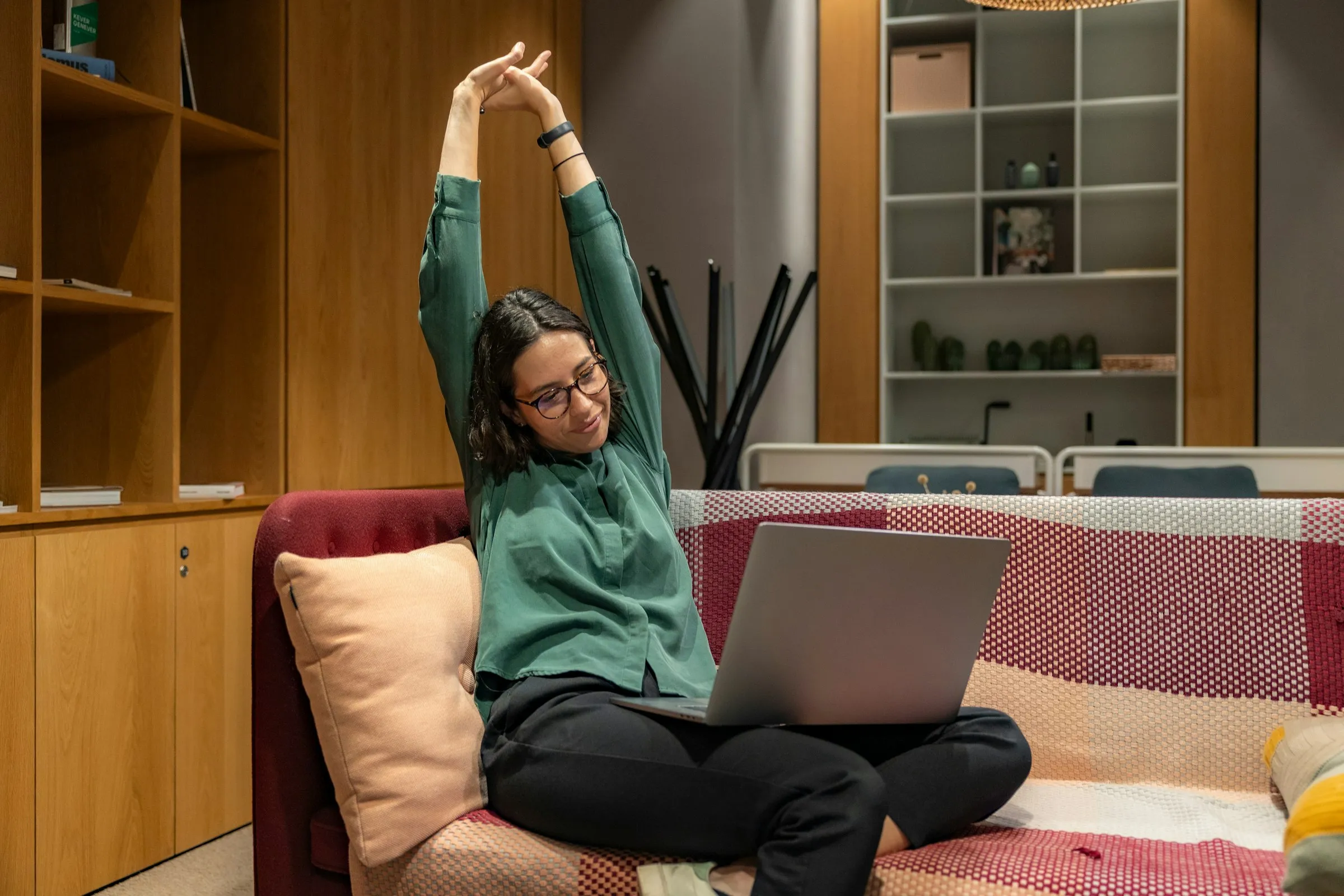
Add one beginner class led by a teacher, either online or at a local studio. Following a teacher’s voice is different from following written steps, and a good beginner class introduces new poses gradually. On busy workdays, the desk stretches count as practice.
Week 4: Make it yours
By now you know which routines you return to. Keep those, add one or two guided classes of 20 to 30 minutes, and notice what you’d like more of: strength, flexibility, relaxation, or simply a calm half hour.
Videos, apps or a studio?
There’s no single right answer. Here’s how the options compare for a beginner.
Free videos are a good way to try different teachers and styles at no cost. The downside is that it’s easy to end up hopping between random videos with no progression, and quality varies widely.
Subscription platforms such as Glo, YogaDownload and Alo Moves organize classes by style, length and level, which makes it much easier to follow a beginner series or find a 20-minute class for a specific need. Many offer a free trial, so you can test the teaching style before you pay. Check the current price and trial terms before you sign up.
A local studio gives you something no screen can: a teacher who can see you and adjust your alignment. A few in-person beginner classes early on can make your home practice safer and more confident, even if you mostly practice at home later.
A combination often works best: short routines like the ones on this site for daily practice, a platform or video series for longer classes, and an occasional studio class for feedback.
Questions beginners often ask
How often should I practice? Three short sessions a week is a solid start. Consistency matters more than length.
Do I need to be flexible? No. Flexibility tends to change gradually with regular practice, and most poses have variations that work for stiff bodies.
Is it OK to practice every day? Gentle practice every day is fine for most people. Mix in restful sessions, and take a day off when you feel sore or tired.
Should I practice on an empty stomach? Many teachers suggest waiting an hour or two after a large meal. A light snack beforehand is usually fine.
What if a pose hurts? Come out of it. Try an easier variation next time, or skip the pose. Pain is not a sign of progress.
Where to go next
Start with week 1, then come back to this page each week. If you’re curious about practicing away from home, our guide to choosing a first yoga retreat explains what to expect.